

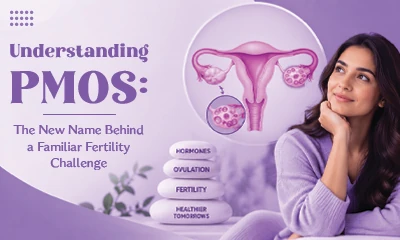
You may have heard your diagnosis referred to by a new name: PMOS, formerly PCOS, which stands for Polyendocrine Metabolic Ovarian Syndrome. It can be disorienting to hear a condition you’ve lived with described differently overnight, but rest assured: it’s the same diagnosis, simply renamed to reflect a more complete understanding of the condition. At KICDelfinium, we work with this condition daily, and we want you to feel informed, not confused, about what it means for your fertility.
PMOS treatment in Delhi
The original label, Polycystic Ovary Syndrome, put the spotlight on ovarian follicles seen during scans. But medical science has since shown the condition is far more expansive, influencing hormone regulation, metabolic function, skin, and emotional health simultaneously. PMOS was introduced to capture this fuller picture, positioning it as a systemic hormonal-metabolic
condition rather than one confined to the reproductive organs. This broader view also shapes how care is delivered, and effective PMOS treatment in Delhi now goes beyond the ovaries to address hormonal balance, metabolic health, and fertility goals together.
The Underlying Hormonal Picture
PMOS emerges from several overlapping processes. Elevated androgens — hormones such as testosterone — interfere with the ovulation process. Simultaneously, many women develop insulin resistance, where cells resist insulin’s normal effects; the body compensates by producing excess insulin, which further drives up androgen levels. The outcome is a reinforcing cycle:
androgen excess disrupts ovulation, insulin resistance intensifies the hormonal imbalance, and cycles become erratic and hard to predict.
Because these factors feed into each other, treating PMOS as an interconnected system — rather than symptom by symptom — tends to deliver the strongest results.
Symptoms That May Point to PMOS
Presentation varies significantly from person to person. Watch for irregular, infrequent, or absent periods; unwanted hair growth on the face or body; acne or oily skin; thinning scalp hair; central weight gain; and darkened skin in areas like the neck or underarms. Emotional symptoms — anxiety, low mood — often accompany the physical ones but are easy to overlook.
Given how differently PMOS can present, a formal clinical evaluation is essential rather than relying on any single symptom.
PMOS and Its Impact on Fertility
Because ovulation becomes irregular or unpredictable, releasing a mature egg consistently each month is difficult — making it one of the most common reasons women seek fertility treatment.
The encouraging reality: PMOS-related fertility challenges respond well to treatment, and most women go on to conceive and carry healthy pregnancies with the right care plan.
How KICDelfinium Manages PMOS
Our process starts with a full diagnostic picture — detailed clinical review, hormonal blood testing, and ultrasound imaging of the ovaries — giving us a precise understanding of your specific hormonal makeup.
Treatment then follows an individualized path. For many, improving metabolic health through personalized diet and activity plans is the starting point, since better insulin sensitivity frequently helps normalize cycles naturally. Hormonal medications may be added to regulate periods and address symptoms such as excess hair or acne. When ovulation still isn’t regular, ovulationinduction drugs can help encourage consistent egg release. For patients who need more intensive support, IUI or IVF offer proven routes to pregnancy. We monitor progress continuously and fine-tune the plan based on how you respond.
Support Every Step of the Way
Being diagnosed with PMOS while trying to conceive can feel daunting, but this is a wellstudied, manageable condition — and with early intervention and a personalized plan, parenthood remains a realistic goal for most women.
If you’re experiencing PMOS symptoms or facing difficulty conceiving, KICDelfinium’s specialists are here to guide you toward clarity and a confident path forward.
FAQs
Is PMOS the same thing as PCOS?
Yes — PMOS is simply the updated name for PCOS, adopted to reflect its wider hormonal and metabolic effects.
Is natural conception possible with PMOS?
Often, yes — particularly with lifestyle changes and hormonal treatment that restore regular ovulation. Some women require additional fertility assistance.
When is it time to consult a fertility specialist?
If your periods are irregular and conception hasn’t happened after 6–12 months of trying, specialist evaluation is recommended.
Does treatment for PMOS focus only on fertility?
No — it also addresses wider metabolic concerns like insulin resistance, important for long-term health beyond pregnancy.
Should I be worried about the ovarian follicles seen in PMOS?
Not typically on their own — they’re simply a marker of the hormonal imbalance driving the condition, which treatment addresses.