

Egg Freezing in Delhi — Preserve Your Future
Lock in your reproductive potential at peak biological age with advanced vitrification technology — performed by expert embryologists at KIC Delfinium. Survival rates 80–90%.
What Is Egg Freezing?
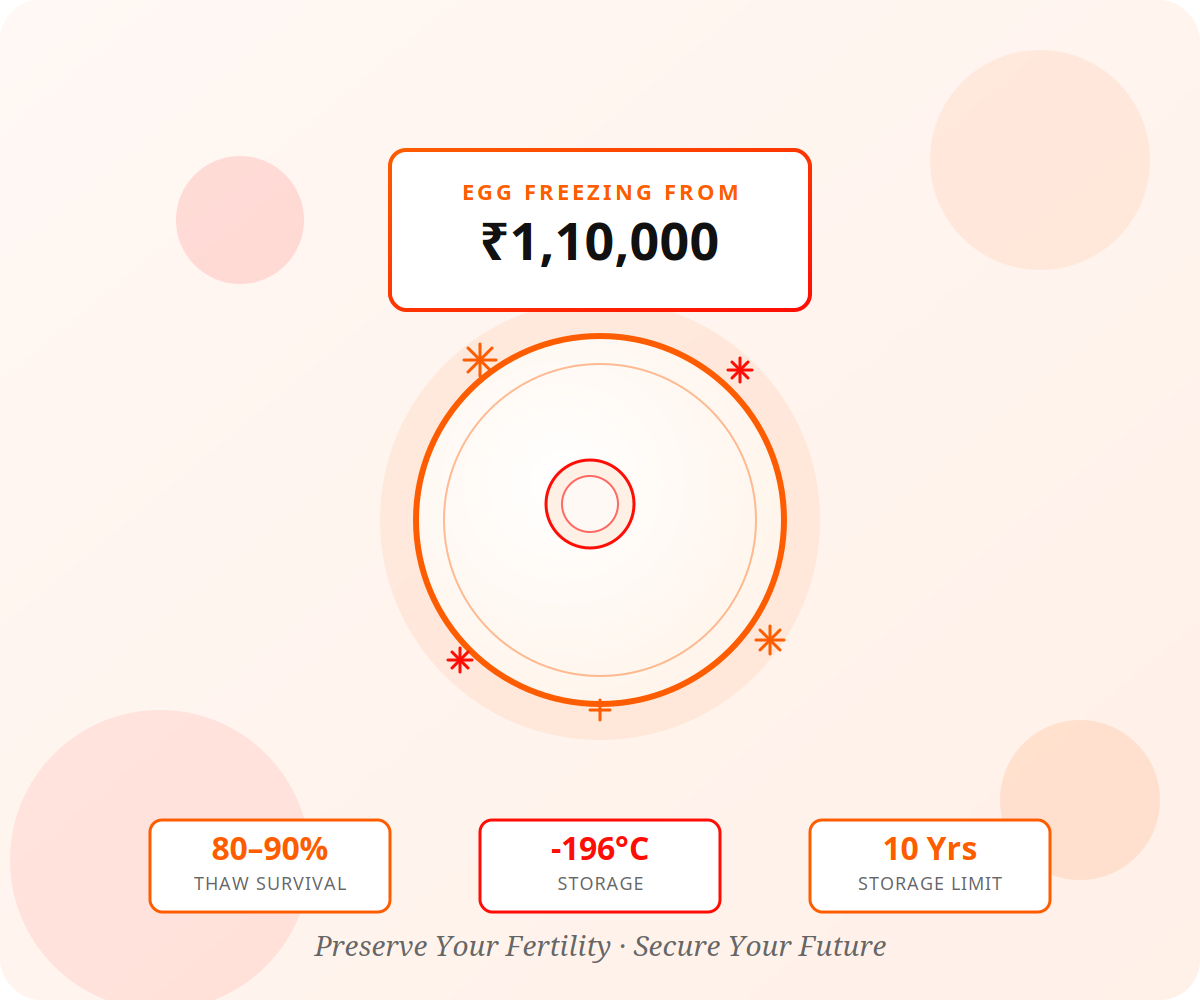
Egg freezing — clinically called oocyte cryopreservation — is a procedure that allows a woman to preserve her unfertilised eggs at their current biological age for future use. Mature eggs are retrieved, flash-frozen using vitrification, and stored in liquid nitrogen at -196 °C until she is ready to conceive.
Vitrification, the gold standard used at KIC Delfinium, converts eggs into a glass-like state within milliseconds — preventing ice crystals from forming and damaging the delicate cell structure. Survival rates of frozen-thawed eggs at accredited centres now reach 80–90%, and clinical pregnancy rates from frozen eggs are comparable to fresh eggs in women under 35.
This makes it the most flexible option for single women, women in new relationships, or those who are simply not yet ready to start a family — allowing biological options to be preserved without any current relationship commitment.
Who Should Consider Egg Freezing?
A medically validated fertility-preservation strategy recommended for a growing range of women.
Age-Related Fertility Decline
Egg quantity and quality decline gradually after 30 and sharply after 35. Women in their late 20s or early 30s who plan future parenthood benefit most from proactive egg banking.
Medical Reasons
Cancer patients before chemo/radiotherapy, women scheduled for ovarian surgery, those with premature ovarian insufficiency, or autoimmune conditions on gonadotoxic medications.
Social & Career Reasons
Many Indian women are pursuing higher education, careers, financial security, or waiting for the right partner. Social freezing is a legitimate and increasingly popular choice.
Not Yet Ready
Some women are simply not in the right life chapter for parenthood. Egg freezing removes the ticking-clock pressure that can lead to rushed reproductive decisions.
Ideal Age for Egg Freezing
The best time to freeze eggs is before age 35, when egg quality is highest and retrieval yields most predictable.
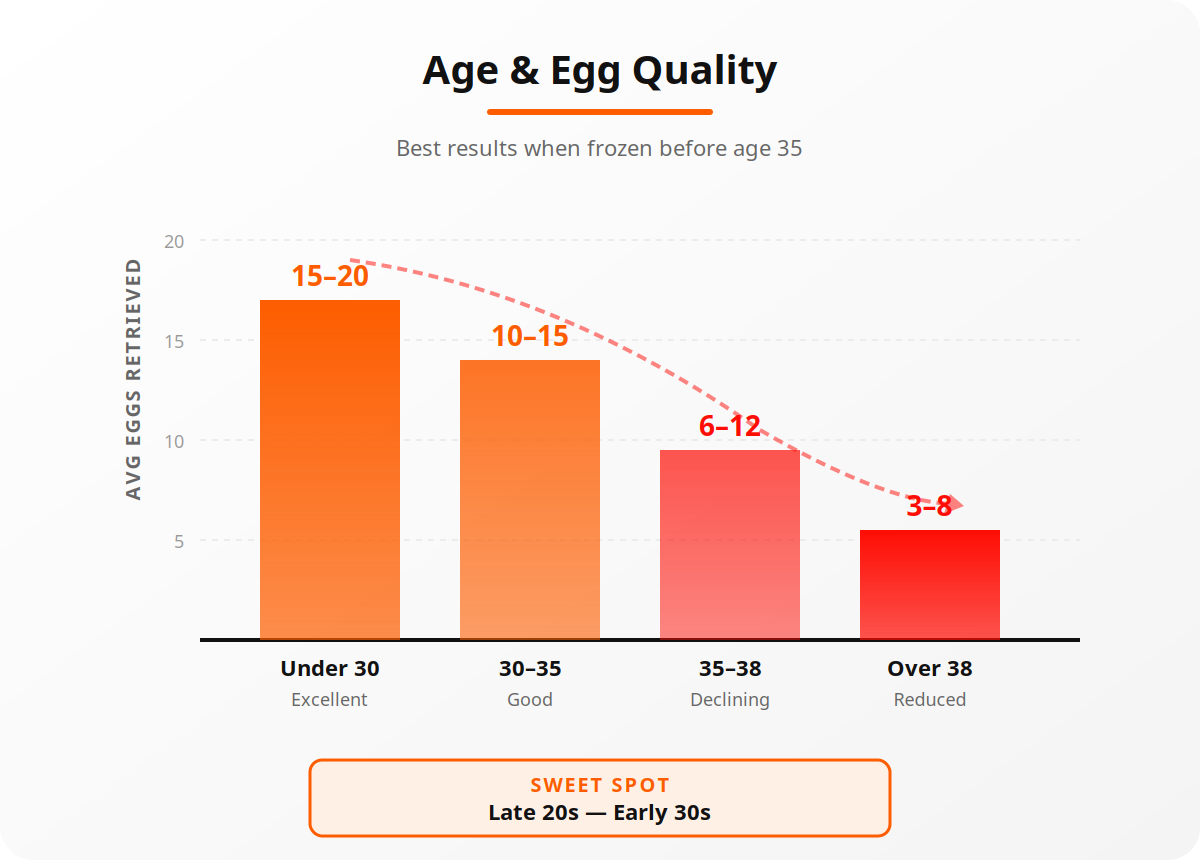
| Age Group | Avg Eggs Retrieved | To Bank |
|---|---|---|
| Under 30 — Excellent | 15–20 | 10–15 |
| 30–35 — Good | 10–15 | 15–20 |
| 35–38 — Declining | 6–12 | 20+ |
| Over 38 — Reduced | 3–8 | Discuss |
Individual results depend on AMH levels, antral follicle count, and overall health. KIC Delfinium offers a comprehensive fertility assessment before recommending a freezing plan.
The Egg Freezing Process
From initial consultation to secure long-term storage, every stage is carefully monitored and supported by our specialist embryology team. The complete process typically takes 3–4 weeks.
Most women continue their regular work throughout stimulation, attending only monitoring appointments every 2–3 days.
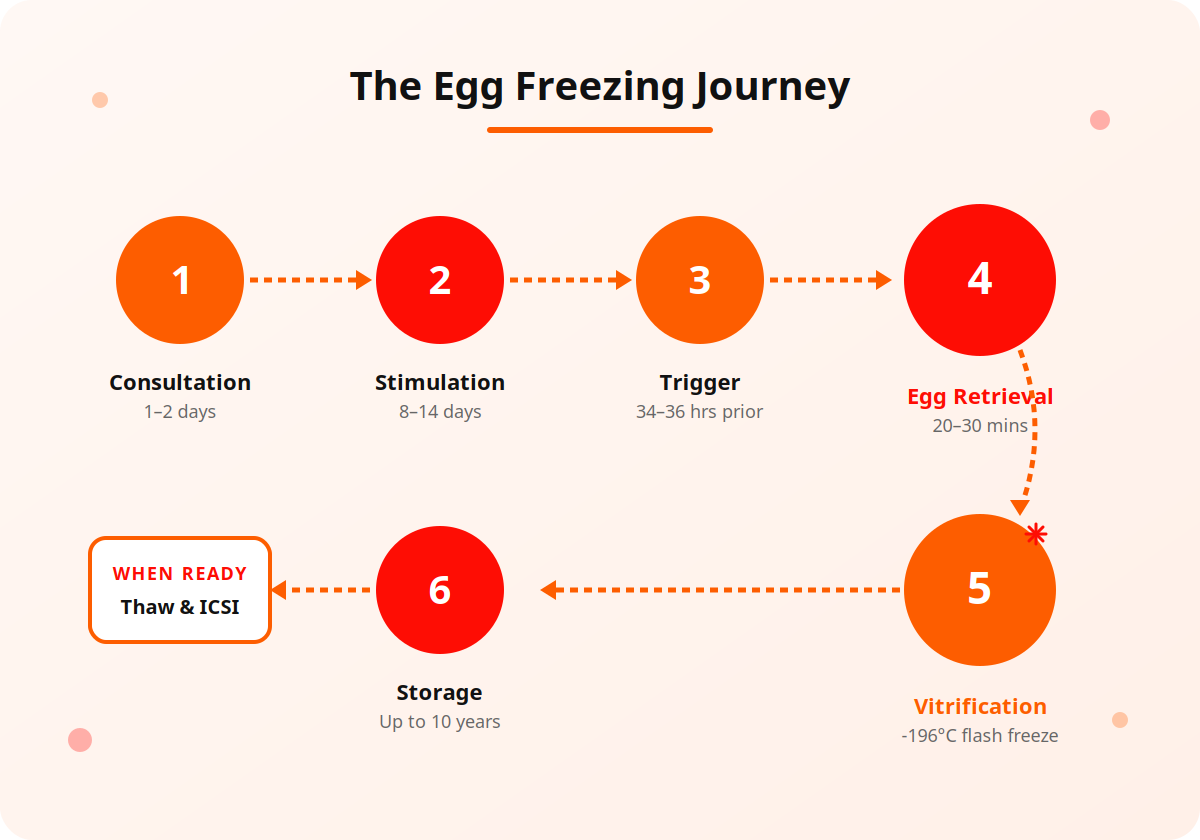
Consultation & Assessment
Blood tests measure FSH, LH, estradiol, and AMH levels; transvaginal ultrasound counts antral follicles. These results determine ovarian reserve and guide your stimulation protocol.
Ovarian Stimulation
Self-administered hormone injections for 8–14 days stimulate multiple follicles to mature simultaneously. Nurses provide full training and a 24/7 helpline.
Trigger Injection
When follicles reach 18–20 mm, a trigger injection (hCG or GnRH agonist) finalises egg maturation. Retrieval scheduled exactly 34–36 hours later.
Egg Retrieval (OPU)
A minor day-care procedure under light sedation. A thin needle guided by ultrasound aspirates the follicular fluid and eggs. Takes 20–30 minutes; home in 2–3 hours.
Vitrification
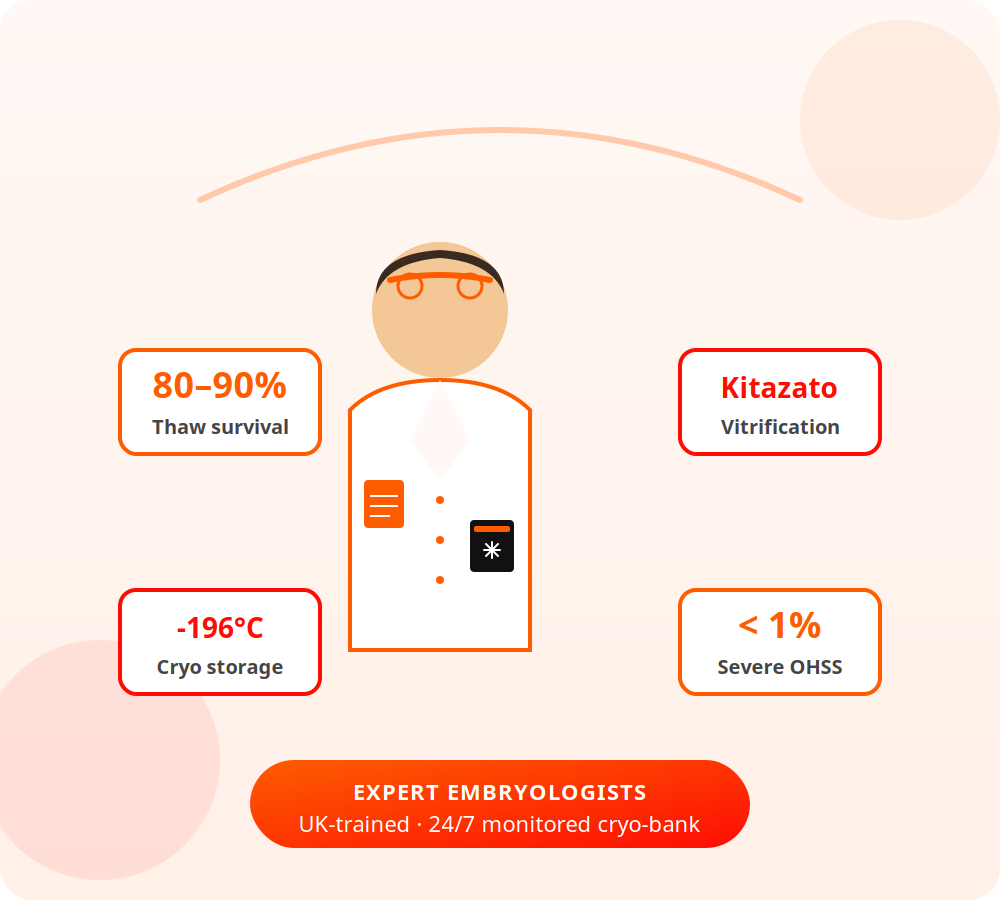
Embryologists identify mature MII eggs under the microscope and vitrify them using the Kitazato protocol within hours of retrieval, then transfer to cryo-storage at -196 °C.
Long-Term Storage
Eggs are stored at KIC Delfinium’s on-site cryo-bank. Annual renewal is straightforward and you receive regular storage confirmation reports.
Egg Freezing Cost at KIC Delfinium
All-inclusive pricing with no hidden charges. Here is a detailed cost breakdown for a standard egg-freezing cycle.
| Component | Approximate Cost |
|---|---|
| Initial Fertility Assessment (AMH, AFC, hormones) | ₹4,000 – ₹6,000 |
| Ovarian Stimulation Medications | ₹50,000 – ₹90,000 |
| Monitoring Scans & Blood Tests | ₹8,000 – ₹12,000 |
| Egg Retrieval (OPU) + Anaesthesia | ₹30,000 – ₹45,000 |
| Embryology Lab Charges (vitrification) | ₹15,000 – ₹20,000 |
| Annual Cryo-Storage Fee | ₹10,000 – ₹15,000 / yr |
| Total per Cycle (excl. storage) | ₹1,10,000 – ₹1,70,000 |
Medication costs vary based on individual ovarian response. Women with low AMH may need higher doses. EMI & financing options available on request.
How Long Can Eggs Be Stored?
Under ICMR guidelines, frozen eggs can be stored for up to 10 years — with no meaningful degradation in quality when cryo-protocols are maintained correctly.
- Continuous liquid-nitrogen monitoring with automated alarms
- Redundant backup tanks ensuring uninterrupted storage
- Annual renewal notifications with status reports on request
- Individually labelled and catalogued sample tracking
- On-site cryo-bank — samples never leave the facility
What Happens When You Use Your Eggs?
When the time comes to build your family, the process picks up from where you left off.
Controlled thawing
Frozen eggs are warmed using a controlled thawing protocol. Typically 80–90% survive the thaw process.
Fertilisation via ICSI
Surviving mature eggs are fertilised with sperm (from your partner or donor) using Intracytoplasmic Sperm Injection — a single sperm injected directly into each egg.
Embryo culture
Fertilised eggs are cultured in the laboratory for 3–5 days until they develop into healthy blastocysts.
Embryo transfer
The best-quality embryo(s) are transferred to your uterus in a timed cycle. Remaining embryos can be frozen (embryo banking) for future attempts.
Pregnancy outcome
Pregnancy rates depend on the age at which eggs were frozen, the number of eggs banked, and individual health factors. KIC Delfinium guides you through every step.
Egg Freezing vs Embryo Freezing
Which is right for you depends on whether you have a committed partner today and your future flexibility needs.
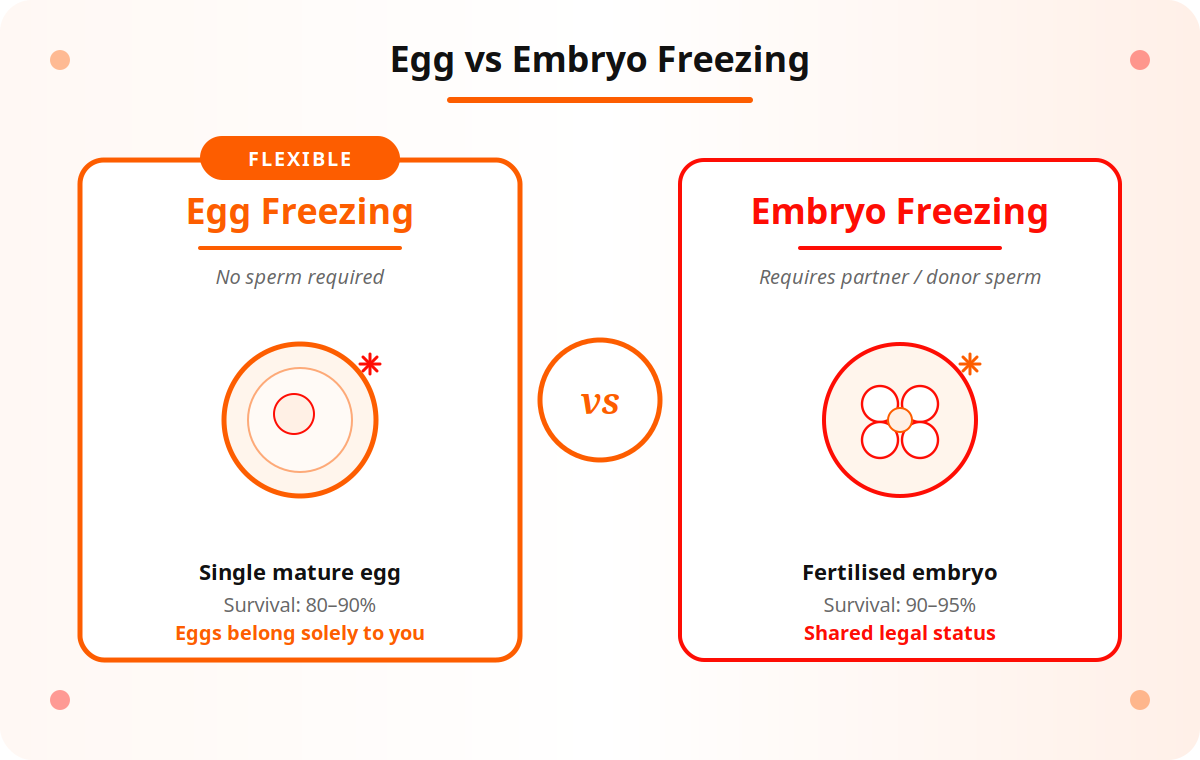
| Factor | Egg Freezing | Embryo Freezing |
|---|---|---|
| Partner sperm required? | No | Yes |
| Best for | Single women | Couples |
| Legal flexibility | High | Shared |
| Thaw survival | 80–90% | 90–95% |
| Pregnancy per transfer | Slightly lower | Higher |
If you have a committed partner and are pursuing IVF, embryo freezing offers marginally higher success rates. Egg freezing is the most flexible and legally uncomplicated option for women who do not yet have a co-parent.
Frequently Asked Questions
Honest answers to the questions women ask most often about egg freezing.
Is egg freezing painful?
The stimulation injections cause mild discomfort at the injection site. Some women experience bloating or pelvic heaviness during stimulation — symptoms that resolve after retrieval. The egg retrieval procedure itself is performed under sedation, so you will not feel pain during it.
How many eggs do I need to freeze for a good chance of success?
Most fertility specialists recommend banking 10–20 mature eggs to achieve a reasonable probability of at least one live birth. Younger women (under 35) may need fewer cycles; women over 35 may benefit from banking eggs across two or more cycles to reach this target.
Will egg freezing affect my natural fertility?
No. The eggs retrieved during stimulation are those that would naturally be lost in that menstrual cycle (the cohort of follicles that would have been absorbed). Egg freezing does not deplete your remaining ovarian reserve or affect future natural conception.
Can I work normally during the egg-freezing cycle?
Most women continue their regular work and activities throughout stimulation. You will need to attend monitoring appointments every 2–3 days. Plan for one day off around the retrieval procedure and the day after for rest.
What is the success rate of frozen eggs at KIC Delfinium Delhi?
KIC Delfinium’s egg-thaw survival rate using vitrification exceeds 85%. Clinical pregnancy rates from frozen eggs depend heavily on the woman’s age at freezing — women under 35 at the time of freezing achieve pregnancy rates of 40–50% per embryo transfer using their frozen eggs.
Are there any medical risks associated with egg freezing?
Egg freezing is considered safe. The primary risk is ovarian hyperstimulation syndrome (OHSS), a response to stimulation medications. At KIC Delfinium, careful monitoring and dose adjustment minimise this risk — severe OHSS occurs in fewer than 1% of cycles at our centre.
How long does the entire egg-freezing cycle take?
From your first consultation to the day of egg retrieval, the process takes approximately 3–4 weeks — roughly 2 weeks for testing and cycle planning, followed by 10–14 days of stimulation and monitoring.

Consult Our Egg Freezing Specialists Today
Book your free initial consultation with KIC Delfinium Delhi. We’ll review your ovarian reserve, recommend a personalised freezing plan, and give you a transparent cost estimate — no obligations.
New Delhi 110049
9 AM – 5 PM