

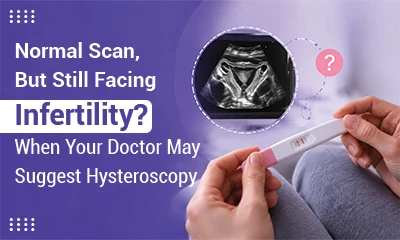
Hysteroscopy before IVF may be advised when your fertility specialist wants to check the uterine cavity more closely before planning…













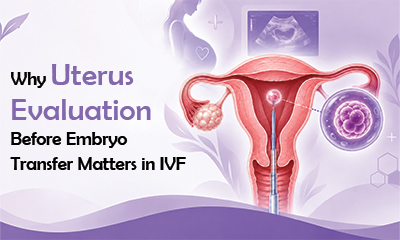
Uterine cavity evaluation before embryo transfer can be an important step in preparing for IVF. An embryo may develop well in the laboratory, but after transfer it needs to implant inside the uterus. This makes the condition of the
uterine cavity an important part of the overall fertility assessment.
Uterine cavity assessment for IVF may help doctors detect abnormalities such as polyps, cavity-distorting fibroids, adhesions or other structural changes. Some of these conditions may not produce noticeable symptoms, which is why an appropriate evaluation can sometimes reveal an issue that would otherwise remain unnoticed.
What happens after an embryo is transferred?
During IVF, eggs are collected and fertilised in the laboratory. The resulting embryo is then transferred into the uterus.
After transfer, implantation is a complex biological process. The embryo needs to interact with the endometrial lining at the appropriate time.
Because the uterine cavity is where implantation occurs, doctors may evaluate it as part of IVF planning, particularly when there are relevant symptoms, previous findings or a history that suggests further assessment may be useful.
What abnormalities can be found?
A uterine evaluation may identify several different conditions.
Polyps:
Endometrial polyps are tissue growths that arise from the uterine lining. They can sometimes be found incidentally during fertility investigations.
Fibroids:
Fibroids are benign growths of the uterus. Not all fibroids have the same effect on fertility. Their size and location, especially whether they distort the uterine cavity, are important considerations.
Intrauterine adhesions:
Adhesions are areas of scar tissue that can develop within the uterine cavity. Depending on their severity, they can change the normal shape of the cavity.
Other structural changes:
Imaging may also identify other abnormalities that require further assessment by a fertility specialist.
Which tests can examine the uterus?
The investigation selected depends on the individual patient.
Transvaginal ultrasound
Ultrasound is commonly used during fertility evaluation. It can provide information about the uterus and endometrium while also allowing the ovaries to be assessed.
However, ultrasound does not always provide a complete picture of the inside of the uterine cavity.
Saline sonography
In saline sonography, sterile saline is introduced into the uterus while ultrasound imaging is performed. The saline can help outline the cavity, making certain abnormalities easier to identify.
Hysteroscopy
Hysteroscopy uses a thin camera to examine the inside of the uterus directly. It can provide a detailed view of the uterine cavity.
If a finding such as a polyp or adhesion is identified, the doctor can determine whether treatment is appropriate and whether it should be completed before embryo transfer.
When might a detailed evaluation be considered?
A detailed assessment may be considered when there is a suspected uterine abnormality, abnormal ultrasound finding, certain symptoms or a relevant previous medical history.
It may also be discussed in patients who have experienced repeated implantationnfailure, depending on the overall clinical picture.
Importantly, not every IVF patient automatically needs every available uterine test. Investigations should be selected according to the patient’s individual circumstances.
Why identifying a problem early can be helpful
Suppose an examination identifies a polyp inside the uterine cavity before the planned embryo transfer. The fertility team can then assess whether removal is appropriate and decide when to proceed with transfer.
Similarly, if adhesions or a cavity-distorting fibroid are identified, the doctor can discuss the available management options.
This is one reason why evaluating the uterus before transfer can be useful: it gives the medical team an opportunity to identify and address potentially relevant cavity abnormalities rather than discovering them later.
What about the endometrial lining?
The uterine lining, or endometrium, also receives attention during IVF treatment.
The appearance and development of the endometrium are assessed during the treatment cycle. However, the thickness of the lining is only one part of the overall picture.
A normal-looking endometrium does not necessarily rule out every problem within the uterine cavity. Depending on the circumstances, further assessment may therefore be considered.
Can checking the uterus guarantee IVF success?
No.
Uterine evaluation is intended to identify structural or cavity-related issues; it cannot guarantee implantation or pregnancy.
IVF outcomes depend on several factors, including age, embryo characteristics, ovarian factors, sperm factors, the uterine environment and other medical considerations.
The purpose of evaluation is to make the treatment plan more informed and to address relevant problems when they are identified.
Ask the right questions before embryo transfer
If you are preparing for an embryo transfer, it is reasonable to ask your fertility specialist:
- Has my uterine cavity been adequately assessed?
- Is there any evidence of a polyp or fibroid affecting the cavity?
- Could I have adhesions?
- Do I need any additional uterine investigation?
- If something is found, does it need treatment before transfer?
The answers will depend on your individual medical history and examination findings.
At KICDelfinium, Delhi, fertility specialists assess patients individually and determine which investigations may be appropriate before embryo transfer.