

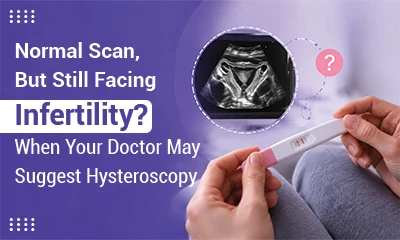
Hysteroscopy before IVF may be advised when your fertility specialist wants to check the uterine cavity more closely before planning…

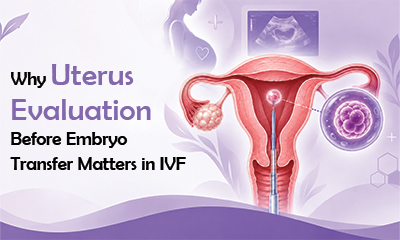







The Clinical Team at KIC Delfinium, Delhi | April 2026
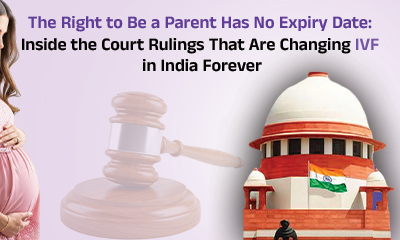
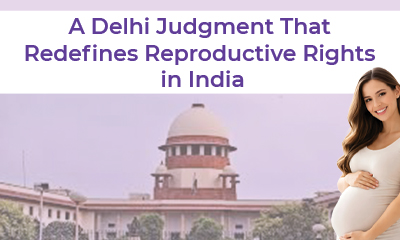
On April 13, 2026, the Delhi High Court issued a ruling that will be studied in medical schools, law faculties, and fertility clinics for years to come. It permitted the surgical retrieval of sperm from a soldier who has been in a persistent vegetative state since suffering a traumatic brain injury on duty — so that his wife may continue the IVF treatment the two of them had planned together before his accident.
We are based in Delhi. This judgment was delivered in Delhi. And we feel its weight directly.
At KIC Delfinium, we see patients who come to us not just with medical problems, but with questions that sit at the uncomfortable intersection of biology, law, and ethics. This ruling speaks to all of them — and it speaks clearly.
The Facts, Plainly Told
An Indian Army Lance Naik sustained severe brain trauma in July 2025 while serving in Jammu & Kashmir. He has not regained consciousness since. Prior to his injury — in 2023 — he and his wife had together consented to IVF treatment and were in the process of building their family through assisted reproduction.
After his accident, his wife sought legal permission to retrieve and preserve his sperm so she could continue the IVF process they had jointly committed to. The barrier she encountered was Section 22 of the Assisted Reproductive Technology (Regulation) Act, 2021, which requires current written consent from both partners. The husband could no longer provide it.
Justice Purushaindra Kumar Kaurav of the Delhi High Court found a way through — not by ignoring the law, but by reading it through the wider constitutional right to reproductive autonomy guaranteed under Article 21.
The Court held that the prior joint consent, given in 2023 before any injury occurred, satisfies the spirit and intent of the ART Act. The wife’s present consent, rooted in that shared decision, is adequate to proceed. The Army Hospital’s medical board confirmed retrieval is feasible, though viability of sperm following prolonged vegetative state remains uncertain.
The Medical Dimension: What Surgical Sperm Retrieval Involves
As a fertility centre, we believe that informed patients make stronger decisions. So let us explain what this procedure actually entails.
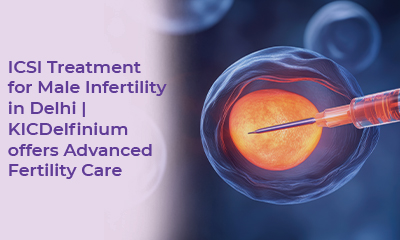
Surgical sperm retrieval covers a range of techniques, each suited to different clinical scenarios. When a man cannot produce a semen sample — whether due to medical incapacity, obstruction, or absent sperm in the ejaculate — sperm can often be obtained directly from the reproductive organs.
TESA (Testicular Sperm Aspiration) is the least invasive option, involving a fine needle inserted into the testis to aspirate fluid that may contain sperm. It is done under local anaesthesia, usually as a day procedure.
PESA (Percutaneous Epididymal Sperm Aspiration) targets the epididymis — the comma-shaped structure attached to the back of each testis where sperm are stored after maturation. It is similarly minimally invasive and suitable for certain obstructive conditions.
TESE (Testicular Sperm Extraction) involves a small incision through which testicular tissue is removed and examined under a microscope for sperm. It is used when aspiration techniques have not yielded sufficient sperm.
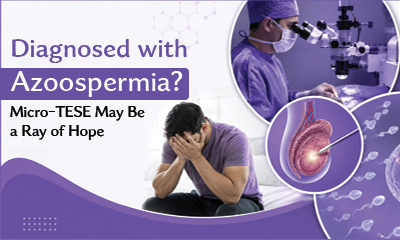
Micro-TESE, performed under high-powered surgical magnification, is the most advanced and precise approach. The surgeon identifies tubules most likely to contain active sperm production and extracts tissue from those specific zones. It is the standard of care for men with very low or absent sperm production and offers the best retrieval rates in complex cases.
In the soldier’s case, the procedure’s feasibility has been confirmed — but outcome depends on factors that only the procedure itself can reveal. At KIC Delfinium, our andrology team is experienced across all these techniques and works hand-in-hand with our IVF laboratory to ensure that every retrieved sperm has the best possible chance of enabling fertilisation.
The Legal Architecture This Ruling Builds
What makes this judgment particularly important from a clinical and ethical standpoint is not just what it decided — but how it reasoned.
The Court made clear that the ART Act cannot be applied in a way that strips individuals of constitutionally protected rights. Reproductive autonomy — the freedom to decide whether, when, and how to have children — has long been recognised as part of the right to life and personal liberty under Article 21. Fertility law does not exist outside the Constitution. It must operate within it.
The Court also invoked a principle of purposive interpretation: if a literal reading of a statute produces an outcome that the statute was never designed to cause, a court may interpret the provision in a way that serves its underlying purpose. The ART Act was designed to protect patients and ensure ethical practice — not to leave spouses without recourse when a procedural requirement becomes physically impossible through no fault of their own.
This logic has now been applied in both the Delhi and Kerala High Courts in 2026. A consistent judicial direction is emerging — one that fills the gaps in fertility legislation with compassion, constitutional principle, and practical wisdom.
What Patients at KIC Delfinium Should Know
If you are currently undergoing IVF or fertility preservation with a partner, this ruling underscores the importance of documented, joint consent. Prior consent — clearly recorded, signed, and specific — carries legal weight in situations that none of us can foresee.
We at KIC Delfinium take documentation seriously not as bureaucracy, but as protection for our patients. We encourage couples to discuss and formalise their wishes at every stage of treatment. If questions ever arise about consent, capacity, or legal eligibility, we work alongside legal advisors to navigate those questions carefully and without delay.
If you are facing a complex fertility situation — surgical sperm retrieval, consent challenges, cryopreservation, or circumstances involving an incapacitated partner — our team in Delhi has both the clinical expertise and the sensitivity to guide you through it.
Closing Reflection
A soldier went to serve his country and came back unable to speak, move, or sign his name. His wife has not stopped fighting for the family they planned together. The Delhi High Court listened.
That is what the law is for — not to erect walls, but to clear paths when people are doing their best under impossible circumstances. At KIC Delfinium, we are proud to practice in a country where courts are capable of such clarity, and we remain committed to standing beside every patient whose journey demands more than medicine alone.
For consultations on IVF, surgical sperm retrieval, cryopreservation, or complex fertility situations, contact KIC Delfinium, New Delhi.


